

Ryan Zavodnick | July 20, 2025 | Product Defect
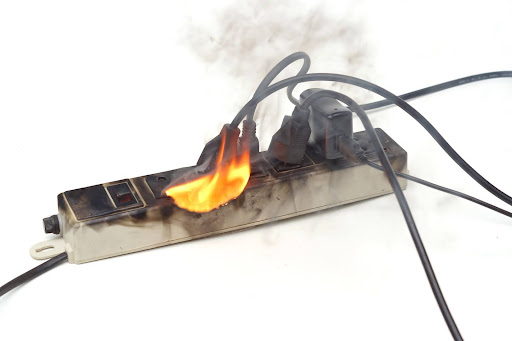
A product liability lawyer can have an important role to play not only in supporting his or her own client, but in drawing attention to potentially dangerous products and ensuring that irresponsible manufacturers are held to account. If you have been injured, or seen a family member harmed, in a products liability case involving a defective product, you are likely to have a number of questions about your options for pursuing compensation. Reach Zavodnick & Lasky’s Pennsylvania product liability lawyers by calling (215) 774-6467 today to book your consultation.
What Is Product Liability?
Product liability refers to both the legal responsibility a business has for ensuring the safety of its products and the type of legal case that is used to claim compensation when someone is harmed because a business has fallen short in the obligations that responsibility places on them. Most types of product liability cases fall within the category of personal injury law – the same area that also includes the pursuit of legal remedy for injuries arising from auto accidents and “slip and fall” incidents. When the product involved is under warranty, however, then a product liability case may sometimes be pursued as a breach of warranty claim. Depending on the terms of the warranty and the nature of the complaint, these cases may bring arguments more commonly related to contracts law into consideration.
Is There a Difference Between Product Liability and Products Liability?
Consumers looking for information on legal services for defective or otherwise dangerous products will likely encounter the term “products liability” as well as “product liability.” Cornell Law School’s Legal Information Institute (LII) – a resource widely used by individuals seeking legal information without easy access to law libraries or the specially-developed research tools used by many law firms – offers listings under both products liability and product liability, while the Notre Dame Law review has preferred the plural “products liability” form.
There are a few logical ways to separate the singular from the plural – for instance, LII says that “product liability” is the legal doctrine that establishes a legal cause of action for defective products, while the definition provided for “products liability” highlights the legal responsibility “along the chain” from product conception, through manufacture and distribution, to a consumer’s hands. Other divisions between the two terms might be devised. The reality, however, is that actual usage, in conversation or in the many materials available through online research, is neither so consistent nor so clear-cut – and if you spend much time reviewing information about products liability or looking for a product liability lawyer, you will more than likely see the two versions used interchangeably. Simply being aware of this circumstance can help you to avoid unnecessary confusion.
What Is the Basis for Products Liability
Whether you prefer to say product liability or products liability, this type of case is somewhat unusual in that its legal basis may fall under civil torts (the type of law that includes personal injury lawsuits of all kinds) or contracts (the type of law that is used in the enforcement of contracts, including warranties, and the adjudication of disputes related to these agreements), depending on the circumstances. Both categories are generally considered “civil” (as opposed to criminal), and will be filed and tried in the Pennsylvania civil courts and handled according to the Pennsylvania Rules of Civil Procedure – but they may apply slightly different presumptions and typically seek “remedy” on different legal grounds.
At Zavodnick & Lasky, our practice is primarily focused on torts, but with a product liability case one of our first steps will often be to determine whether the product involved is under warranty (or was under warranty at the time of the incident that led the consumer to seek relief), and, if so, how the terms of the warranty may affect the consumer’s options for pursuing compensation. A breach of warranty case will necessarily be based on a claim that the manufacturer or other responsible party has in some way failed to uphold the terms of the applicable warranty, which will be specific to the situation. Products liability cases based in torts law, however, are unusual in another way. Unlike the vast majority of personal injury cases, which overwhelmingly seek to prove the responsible party’s negligence, product liability cases may often be brought on the basis of strict liability.
How Does Product Liability Differ From Other Personal Injury Cases?
All personal injury cases, including those involving product liability claims, belong to the category of law known as civil torts. A tort is essentially a fault or wrong, and generally speaking can only be committed by someone who has a “duty of care” – which, depending on the context, can be a responsibility based on an established professional relationship, or something as simple as the basic obligation we all have to take normal measures to avoid needlessly inflicting harm on other people or their property as we move through the day.
There are three types of torts recognized in American jurisprudence:
- Intentional torts, in which the party is held responsible for deliberately acting (or deliberately refusing to act) for the purpose of harming someone else
- Negligent torts, in which the tortfeasor (the party found to have committed the tort) may not have intended to hurt anyone, but failed to take ordinary and reasonable measures to prevent foreseeable harms
- Strict liability, in which neither the intent nor the degree of caution exercised matter, because the party found to have caused harm is considered to have had an absolute responsibility to prevent such harms from occurring
Negligence is the most common basis for tort allegations by such a wide margin that it is not unusual for some people – especially those not trained in legal theory – to speak of negligence and civil liability as if they were the same thing. However, product liability cases are among the few types that highlight a meaningful distinction between these two concepts, as a product liability case brought over a defective product is often tried according to the doctrine of strict liability – under which the plaintiff does not need to prove the defendant’s negligence in order to secure a favorable judgment.
What Does a Product Liability Lawyer Do?
Once a product liability lawyer has determined that breach of warranty is not the most appropriate grounds for their client’s legal action, the next step will often be to evaluate whether the circumstances of the case align with the criteria for strict liability. The concept of strict liability generally exists throughout the United States, but not all states apply the doctrine in precisely the same way. In Pennsylvania, the application of strict liability to products liability cases – most particularly those based on claims of product defects – is guided by legal precedent established in case law.
Strict Liability in Pennsylvania Case Law
A conversation with a product liability lawyer may be useful in seeing how Pennsylvania case law is likely to apply in your situation, but broadly speaking one of the most important rulings for a product liability case in Philadelphia is likely to be the Pennsylvania Supreme Court’s 2014 decision in Tincher v. Omega Flex, which explicitly linked the use of the strict liability theory in a products liability case to the “defective condition” of the product concerned – that is, strict liability will typically not apply in product liability cases in which a product defect is not the cause of the complaint. The same decision also articulated the two-part test for proving “defective condition” in a Pennsylvania product liability case.
What Is the Significance of Strict Liability?
The primary reason why a product liability lawyer may recommend building a case on the legal theory of strict liability if there appears to be sufficient evidence to prove a product defect is that proving a product is defective under the Supreme Court’s two-part test is generally easier than proving that the designer, manufacturer, or distributor was negligent at some point in the product’s journey into the consumer’s hands. While a case brought on the grounds of negligence will need to prove that there was a duty of care, that the duty of care was breached, that the plaintiff was harmed, and that the harms the plaintiff suffered were caused by the breach, a defective product strict liability case only needs to prove one of the following:
- That the product poses hazards that an average or ordinary consumer would not know or accept
- That a reasonable person would consider the likelihood and gravity of those risks to outweigh the inconvenience or expense of taking precautions
While a strict liability case may not be easy, it generally requires the plaintiff to prove fewer elements than would a claim based on negligence.
Speak With Our Pennsylvania Product Liability Lawyers
Defective products pose a hazard to consumers and the general public. As a result, courts tend to take allegations of product defects seriously. Knowing the stakes, companies accused of putting defective products into the marketplace have every incentive to mount a vigorous defense. Working with one of our Pennsylvania product liability lawyers may help you to evaluate your legal options and approach the process of pursuing compensation with confidence. Call Zavodnick & Lasky at (215) 774-6467 today to schedule a consultation.
